Analytics Groups: Structure, Roles, and Best Practices
Analytics Groups: Structure, Roles, and Best Practices

Analytics groups are structured teams of data professionals organized to improve collaboration, data quality, and business decision-making across an organization. The term is widely used, but the recognized industry label is “data analytics team,” and the two refer to the same cross-functional unit combining data engineering, analysis, and governance. California’s tech-dense market, from San Francisco’s SaaS corridor to Los Angeles’s media and entertainment sector, makes this structure especially relevant. The true purpose of these teams is to improve decision quality and speed, not merely produce dashboards. That distinction separates high-performing groups from ones that generate reports nobody acts on.
1. What are analytics groups and why do they matter?
Analytics groups are cross-functional units built to turn raw data into decisions that drive revenue and efficiency. They are not reporting factories. A well-structured group combines data engineers who build pipelines, analysts who interpret outputs, and governance specialists who maintain data trust. Without all three functions, teams either produce unreliable data or accurate data that nobody can find or use.
The goal is decision speed. A group that takes three weeks to answer a product question has already lost the business value of that answer. Data teams that focus on decision quality over dashboard volume consistently deliver more measurable impact. That framing should guide every structural choice you make.

2. What is the best overall structure for analytics groups?
The hub-and-spoke hybrid model is the recommended default for organizations with more than 50 employees. A central team manages data infrastructure, governance standards, and metric definitions. Embedded analysts sit inside business units, close to domain context and stakeholder decisions.
This structure solves the core tension in analytics group design. Pure centralization creates bottlenecks. Pure decentralization creates fragmented, inconsistent data. The hybrid model gives you both consistency and speed.
Key benefits of the hub-and-spoke model:
- Central governance prevents metric drift across departments
- Embedded analysts understand business context that central teams miss
- Shared infrastructure reduces duplicated engineering work
- Domain analysts can escalate complex problems to the central team
- Governance standards apply uniformly without slowing down local work
Pro Tip: Build the central hub first. Embedding analysts before you have shared infrastructure and metric definitions creates the same fragmentation problems as a fully decentralized model.
The hiring sequence inside this model follows a clear logic. You hire a data or analytics engineer first to build the foundation. You add domain-aligned analysts second. You bring in a governance specialist third. Data scientists come last, once there is reliable data and clear business questions to answer.
3. Top 5 common analytics group structures and when to use each
Centralized structure
A single team serves the entire organization. All requests route through one group. This works well for early-stage companies or organizations with fewer than 30 data consumers. The risk is that the team becomes a bottleneck as request volume grows.
Decentralized structure
Analysts embed directly in business units with no central coordination. Teams move fast and stay close to domain problems. The downside is metric inconsistency. Two departments often calculate the same KPI differently, which creates conflict in executive reporting.
Hybrid hub-and-spoke
Hybrid structures that map team design to company culture and analytics maturity outperform both pure centralization and pure decentralization. This is the most scalable model for mid-size and large organizations.
Federated model
Product-aligned analytics groups operate semi-independently but share a common data platform and governance layer. This works well for companies with distinct product lines or business units that have very different data needs.
AI-augmented structure
AI tools are collapsing traditional talent stacks. One analyst with access to AI-powered query tools can now cover work that previously required two or three specialists. This model is emerging in California’s tech sector and is reshaping how teams think about headcount.
Each structure has a situational fit. The right choice depends on your organization’s size, data maturity, and how much consistency you need across business units.
4. Key roles and hiring sequence in successful analytics groups
A well-built data analytics team spans three core functions: data engineering, analytics, and data science. The roles within those functions are distinct, and the order you hire them matters more than most leaders realize.
The recommended hiring sequence:
- Data or analytics engineer. Builds pipelines, models raw data, and creates the infrastructure everyone else depends on. Without this role, analysts work with unreliable or inaccessible data.
- Domain-aligned analyst. Interprets data outputs and works directly with business stakeholders. This role translates data into decisions.
- Governance specialist. Defines metric standards, data contracts, and documentation practices. This role prevents the metric drift that kills trust in analytics outputs.
- Data scientist. Builds predictive models and runs experiments. This role only delivers value when the first three are in place.
Hiring a data scientist before laying engineering foundations is one of the most common and costly mistakes analytics leaders make. Data scientists need clean, reliable data to do their work. Without it, they spend most of their time on data cleaning instead of modeling.
Pro Tip: If your analysts spend more than 30% of their time cleaning data, you hired in the wrong order. Bring in an analytics engineer before adding more analytical headcount.
High-functioning groups also maintain staffing ratios that support sustainable capacity. Sustainable analytics teams maintain at least 6 developers per group alongside a 1:1:1 ratio of Product Managers, Product Designers, and Engineering Managers. That ratio prevents any single function from becoming the team’s permanent bottleneck.
5. Best practices for managing and scaling analytics groups
Scaling a data analytics team without losing consistency is the hardest part of analytics group management. Most teams that fail at scale do so because they never established clear ownership of metrics and outputs.
Core best practices:
- Assign business ownership to every key metric. Someone outside the analytics team should be accountable for acting on each output.
- Use data contracts to define how data is produced, formatted, and updated. Contracts prevent silent schema changes from breaking downstream reports.
- Document everything. Tribal knowledge is the enemy of scale.
- Build self-serve analytics tools so non-technical stakeholders can answer routine questions without filing a request.
Analytics teams that own OKRs and forecasts shift from service desks to active business partners. That shift improves both team morale and organizational impact. When analysts own outcomes rather than just outputs, they make better prioritization decisions.
“The shift from service desk to active business ownership is what separates analytics groups that get budget cuts from those that get headcount increases. Own the metric, own the outcome, own the seat at the table.”
AI-powered self-serve tools reduce the volume of ad-hoc requests that slow central teams down. When non-technical staff can query data directly, analysts spend more time on complex, high-value problems. That reallocation of effort is where most of the productivity gains in modern analytics groups come from.
6. How AI is reshaping analytics group roles and workflows
AI tools are fundamentally changing what analytics groups look like. AI agents automate pipeline development and routine analysis, shifting the team’s role from bottleneck to enabler. That shift has structural implications.
Key changes AI is driving in analytics group design:
- Individual analysts now cover tasks that previously required multiple specialists
- Non-technical staff can self-serve data queries with AI-powered tools
- Engineering time shifts from building routine pipelines to maintaining governance and data quality
- Teams need fewer junior analysts and more senior roles focused on judgment and interpretation
- Governance becomes more critical, not less, as AI-generated outputs need validation
GitHub’s internal analytics agent reduced support tickets and improved data exploration speed for non-technical staff. That outcome is repeatable. The infrastructure investment required is real, but the reduction in bottlenecks is measurable.
The risk in AI adoption is governance erosion. When anyone can generate a data output, the question of which output is correct becomes harder to answer. Analytics groups that maintain strong data contracts and documentation practices are better positioned to manage that risk. AI expands capability. Governance maintains trust.
Key takeaways
The most effective analytics groups combine centralized data governance with embedded domain expertise, hire in the correct sequence, and treat metric ownership as a business responsibility rather than a technical task.
| Point | Details |
|---|---|
| Hub-and-spoke is the default | Use a central governance team with embedded analysts for organizations over 50 employees. |
| Hire engineers before scientists | Build data foundations before adding data scientists or advanced analytics roles. |
| Own the metrics | Analytics groups that own OKRs and forecasts drive more organizational impact than those that only produce reports. |
| AI shifts roles, not headcount alone | AI tools expand individual analyst capacity and move teams from bottleneck to enabler. |
| Governance scales trust | Data contracts and documentation prevent metric drift as teams and data volumes grow. |
Why most analytics groups get the structure wrong
The most common mistake I see is treating analytics group structure as a headcount problem. Leaders hire more analysts when the real issue is that nobody built the data foundation first. I have watched teams with six analysts produce less reliable output than teams with two analysts and one strong analytics engineer. The engineer is the force multiplier.
The second mistake is premature specialization. Hiring a data scientist in month three, before you have clean pipelines or documented metrics, is expensive and demoralizing for the scientist. They spend their time on data cleaning, which is not what they were hired to do and not what they are best at.
The hybrid hub-and-spoke model works because it matches organizational reality. Business units have context that central teams lack. Central teams have infrastructure and standards that business units cannot build alone. The model forces collaboration rather than leaving it to chance.
My strongest recommendation for California-based teams scaling in 2026: treat AI adoption as a governance challenge, not just a productivity opportunity. The teams winning right now are not the ones with the most AI tools. They are the ones with the clearest data contracts and the most disciplined metric ownership. Eventhound AI is one example of how AI-powered platforms are building that kind of structured, trustworthy data layer into their core product design.
— Gregory
Eventhound and smarter data collaboration for analytics teams
Analytics groups need tools that reduce manual data work and surface insights faster. Eventhound’s AI-powered platform is built to do exactly that for event intelligence and local data.
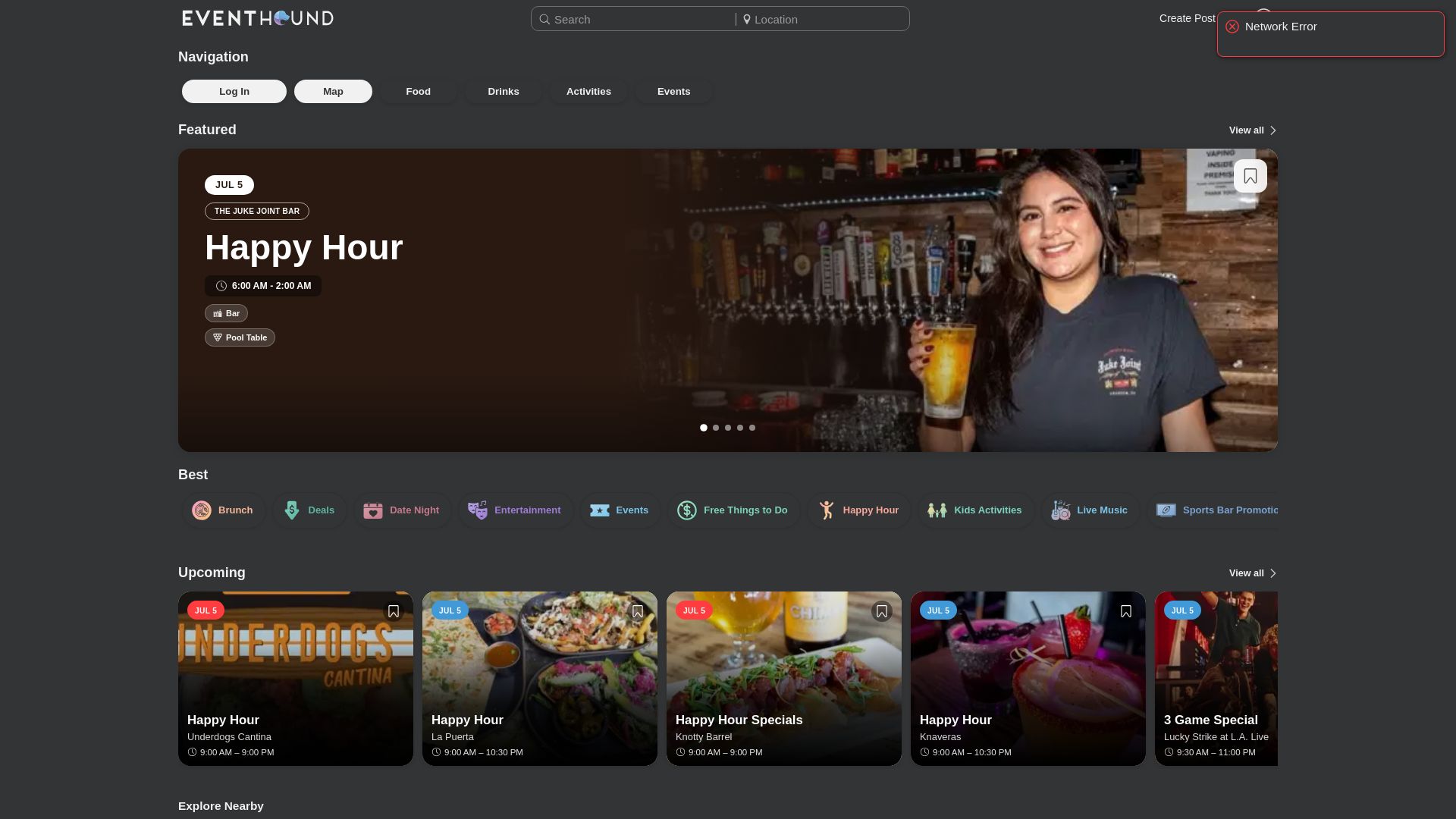
For teams working with event data, community activity signals, or local business trends across California, Eventhound’s event discovery platform connects real-time local data with the kind of structured, AI-driven outputs that analytics groups can actually use. The platform reduces the manual aggregation work that slows down analysis and gives teams cleaner inputs for decision-making. If your group works with location-based or community data, Eventhound AI is worth a close look.
FAQ
What are analytics groups?
Analytics groups are cross-functional teams of data professionals organized to improve decision-making speed and quality across an organization. They combine data engineering, analysis, and governance functions into a coordinated unit.
What is the best structure for a data analytics team?
The hub-and-spoke hybrid model is the recommended structure for organizations with more than 50 employees. It pairs a central governance team with analysts embedded in business units.
What roles belong in an analytics group?
Core roles include data engineer, domain-aligned analyst, governance specialist, and data scientist, hired in that order. Skipping the engineering and governance roles before adding data scientists is a common and costly mistake.
How does AI affect analytics group structure?
AI tools allow individual analysts to cover tasks that previously required multiple specialists, shifting teams from bottlenecks to enablers. Governance and data contract practices become more critical as AI-generated outputs require validation.
How do analytics groups stay aligned with business goals?
Analytics groups that own OKRs and business forecasts maintain stronger alignment than those that only respond to ad-hoc requests. Metric ownership ties analytical work directly to organizational outcomes.